
Flint, MI · Garage Door Service
Why So Many Flint Garage Doors Leak Heat
Most Flint homes went up between 1949 and 1993, many without insulated garage doors. See what that means for repairs, costs, and winter performance here.
- Repairs & new doors
- Springs & openers
- Serving 7 nearby communities
The Cost of This Job
We don't post a flat number for this kind of job because it depends on what's actually hanging in the opening. A lot of the doors we find on Flint's older housing stock are single-layer steel or wood panel, put up before anyone wrote an insulation requirement into the code for garage doors. Some of those can take an aftermarket insulation kit and a new bottom seal and call it done. Others are too far gone - warped panels, rusted hinges, hardware that doesn't match anything on the shelf anymore - and the honest answer is that a full insulated steel replacement costs less over five years than patching a door from that era piece by piece.
What drives the number on any given call: door size, whether the track and rollers need replacing along with the panel, and whether the opener is strong enough for the added weight of an insulated door. We walk the job, tell you what we see, and give you the number for your door - not an average pulled from a price sheet. If a repair isn't worth doing, we'll say so before we start.
How Local Conditions Play In
Housing in this area mostly dates to 1949 through 1993, with the typical home built around 1970, and that run shows up block after block across the 28 named areas we work in. Garage doors from that stretch were built to a standard that didn't ask for an insulation layer - steel skin, air space, done. Nobody was wrong to build it that way; the code simply didn't require more.
The problem is what sits on the other side of that door now. Flint falls in a climate band rated cold and severe, meaning real freeze-thaw cycles and sustained stretches below freezing most winters. An uninsulated steel door does almost nothing to slow heat loss from an attached garage, and if that garage shares a wall with living space, the cold comes straight through. We see it most on the 1960s and 70s stock that makes up the bulk of the housing here - same panel, same gap, same cold wall year after year, until someone decides to do something about it.
Season by Season
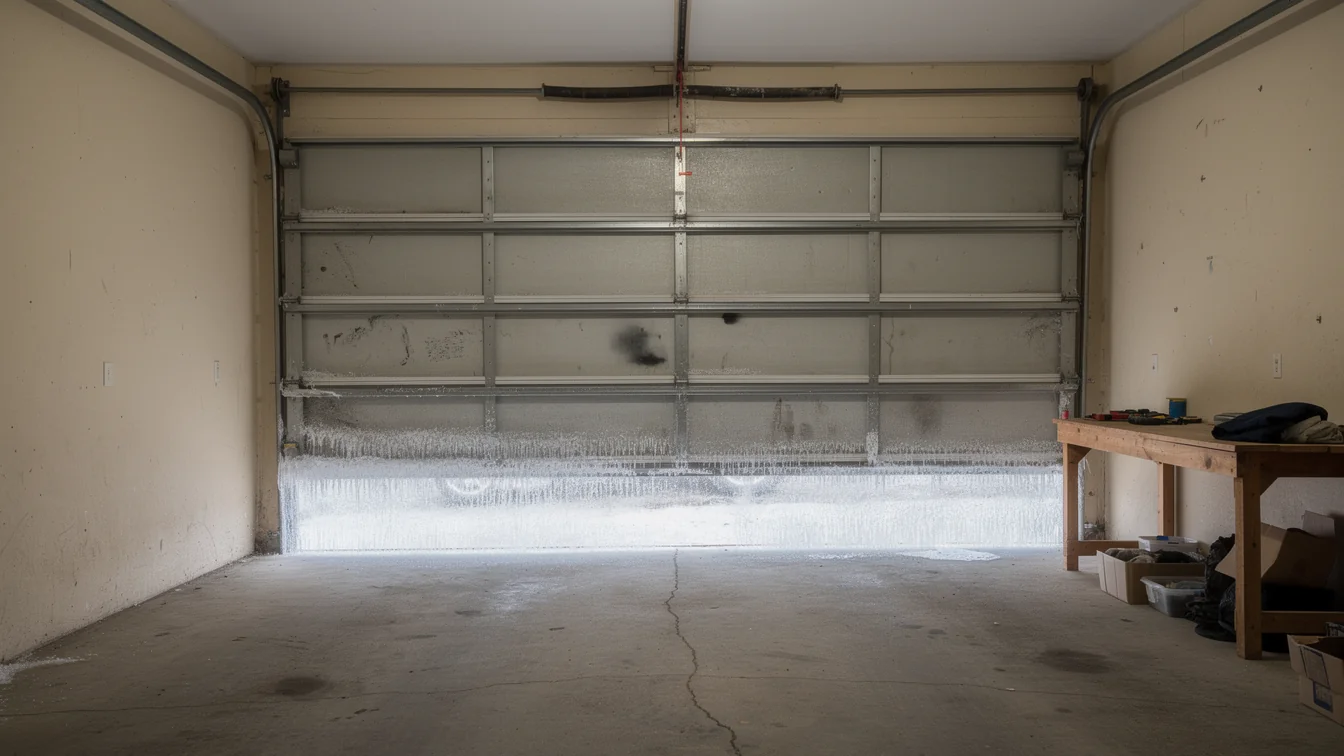
Winter is where an uninsulated door costs you the most. In a severe cold band like this one, steel contracts, seals shrink, and gaps that were tight in August open up by January. We get calls where the door has frozen to the slab overnight, or where ice has built up along the bottom seal and jammed the rollers. None of that is a design flaw exactly - it's what happens to a 50-year-old panel in weather it was never insulated against.
Spring brings the meltwater and the thaw cycles, which is when a lot of the rust and hardware wear from winter actually shows itself - a track that was fine in January starts binding once the ground softens and the frame shifts slightly. Summer is calmer for the door itself, though the swing in temperature between a cold garage floor and a hot afternoon still stresses old panel seams that have been flexing since before most warranties would have covered them anyway. By fall we're back to prepping doors for another freeze, which is really the same job every year on houses this age.
The Situation
The service area runs out from Flint through towns like Burton, four miles out, Beecher at five, and Grand Blanc at seven, stretching as far as Lapeer and Millington near the edge of our range. Across that area there are 61,539 households and 34,169 owner-occupied houses, a lot of them sitting on that same 1949-1993 housing stock with the same mid-century garage door behind the same detached or attached garage.
Median household income here runs $62,678, and that number matters more than it sounds like it should - it's a big part of why we see more repair calls than full-replacement calls on older doors, and why we try to be straight about which jobs are worth fixing versus which ones aren't. A door that's rusted through at the bottom panel and missing half its original hardware usually isn't worth insulating. A door that's structurally sound but just cold is usually worth the retrofit. We tell you which one you've got before any money changes hands.
Frequently asked questions
Can you add insulation to an old garage door instead of replacing it?
Sometimes, yes. If the panels are sound and the hardware isn't rusted out, an aftermarket insulation kit with a new bottom seal can cut down on the cold coming through. If the door is already warped or the hardware is failing, insulating it is just delaying a replacement you'll need anyway, and we'll say so.
Why does my garage feel colder than it used to?
On houses from the 1960s and 70s, which make up most of the stock in this area, original garage doors were built without any insulation requirement. Decades of freeze-thaw cycles in a cold climate band like ours wear down seals and tighten gaps, so a door that felt fine ten years ago can feel noticeably colder now.
Is it cheaper to repair or replace an old uninsulated door?
It depends on the door. A sound panel with worn seals is usually a repair. A door with rust-through, bent track, or hardware nobody stocks anymore usually costs more to keep patching than to replace with an insulated steel door. We look at the actual door before giving you a direction, not a guess.
Related garage door services in Flint
More garage door guides
Book garage door service in Flint
Call now or request a quote - tell us what the door is doing and where you are.