
Flint, MI · Garage Door Service
Openers and Power Outages: What Flint Homeowners Are Actually Dealing With
Flint homes built mostly 1960s-70s face openers that weren't made for today's power outages. Here's what that means for your door, your opener, and your wallet.
- Repairs & new doors
- Springs & openers
- Serving 7 nearby communities
The Cost of This Job
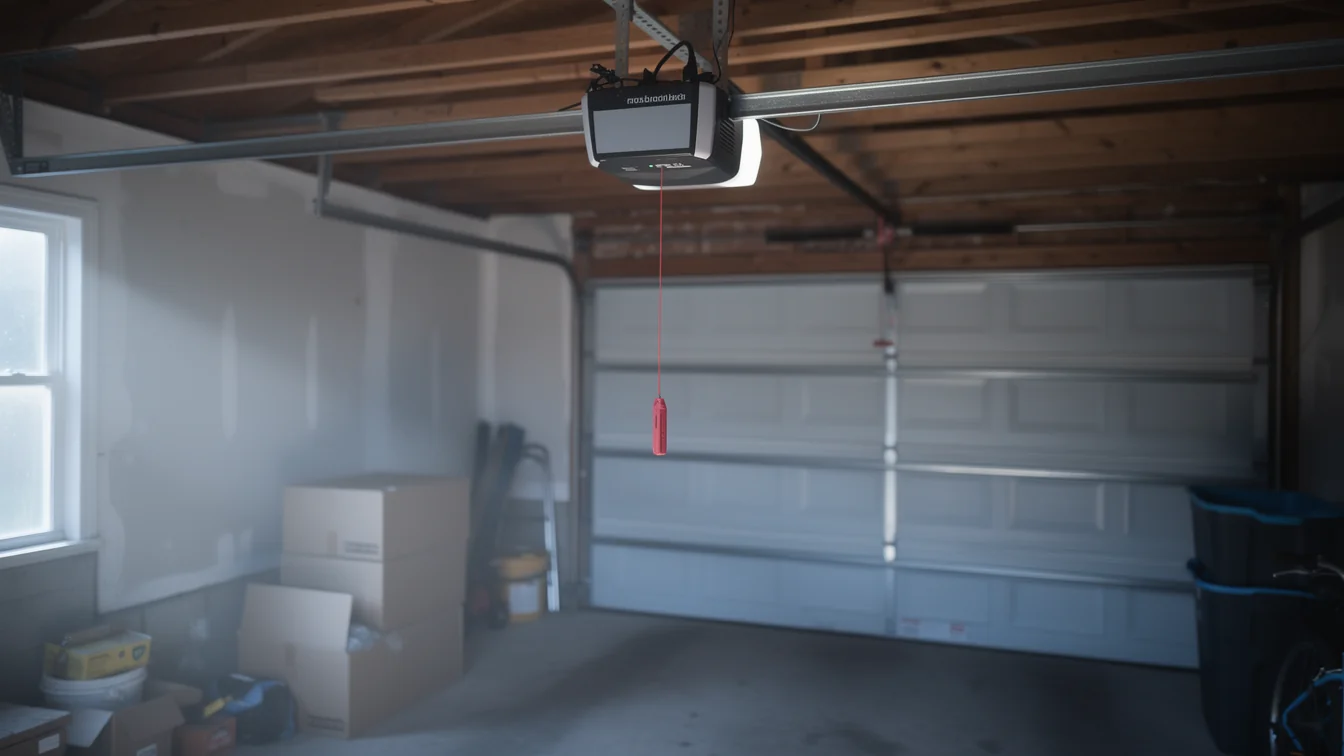
What you pay for an opener job in Flint depends on three things: what's already on the wall, what's feeding it, and whether the door itself is original. A lot of houses in this area went up between 1949 and 1993, with most of that stock dating to the 1960s and '70s. That means a fair number of openers out there are chain-drive units bolted to brackets that have been flexing for decades, with wiring that was never meant to carry a battery backup unit.
If your opener dies during a power outage and you're replacing it anyway, the honest advice is to put in a model with battery backup rather than match what you had. It costs more up front. It also means the next ice storm that knocks out power for a few hours doesn't leave your car stuck behind a door that won't budge. If your house still has the original torsion hardware from a 1960s or '70s build, that's a separate conversation from the opener itself - don't let anyone bundle a hardware swap into an opener quote without explaining why.
We don't chase every opener issue back to the motor. Sometimes it's a sagging track or a cracked panel making the opener work harder than it should, and that's a different fix entirely.
How Local Conditions Play In
This area sits in a cold-severe climate band, and that matters more for openers than most people think. Cold doesn't just stiffen springs - it slows the gearing in older chain-drive openers and makes the safety sensors finicky when ice builds up on the lenses. Combine that with a housing stock mostly from the 1960s and '70s, and you get openers that are reaching the end of their mechanical life right around the same years the grid sees its worst ice and wind loading.
Power outages here aren't rare events you plan one battery backup for and forget. They're a recurring part of owning a house in this climate band, which is why we see openers without backup fail people at the worst moment - door stuck shut, car inside, power out for hours. A newer opener with a battery backup unit doesn't fix the power grid, but it keeps your door usable while everything else on the block is dark.
We can't tell you how long any specific outage will run. What we can say is that if your opener is original to a 1960s or '70s build, it was never engineered with a backup battery in mind, and retrofitting one onto an old unit isn't always possible.
Season by Season
Winter is where openers in this area earn or lose their keep. Cold-severe conditions mean grease thickens, chains tighten up, and the cold makes any existing slack in an old bracket more obvious as the door strains against stiff springs. If a power outage hits during a January storm, a battery-backup opener gets you in and out. One without it leaves you pulling the manual release and lifting a door by hand, which is a workout on a cold, heavy door from a 1970s build.
Spring and fall are when we see opener issues that got ignored all winter finally show up - a motor that's been straining, a sensor that's been icing over and finally quits. Summer is lighter opener work overall, but it's a good window to put in a backup battery before the next ice season, since nobody wants that job scheduled during a storm.
We don't push backup batteries on every job. If your opener is newer and your panel and track are solid, it may not be worth the add-on cost. But on an original 1960s or '70s opener that's already due for replacement, skipping it is a bet against a climate that doesn't usually pay out in your favor.
The Situation
We work out of Flint and cover the surrounding area, including Burton, Beecher, Mount Morris, Grand Blanc, Swartz Creek, Flushing, Davison, and the smaller communities farther out like Clio, Goodrich, and Montrose. Most of what we see is a direct result of when this area was built - housing here mostly dates to 1949 through 1993, with the bulk from the 1960s and '70s, spread across close to thirty named areas rather than concentrated in one subdivision era.
Across the service area there are roughly 61,500 households and about 34,200 owner-occupied houses, with median household income around $62,700. That mix means a lot of owners holding onto original equipment longer than a newer, higher-turnover market would, which is exactly the pattern we see with openers: units run well past when they'd get replaced elsewhere because the house, and the opener in it, is still fundamentally sound.
The short version: if your opener and your power supply are both original to a 1960s or '70s build, the two of them meeting an ice storm is a predictable failure, not a freak one. That's the situation we're actually solving, not a generic maintenance checklist.
Frequently asked questions
Will a battery backup opener actually get my door open during a real outage?
Yes, for the number of cycles the battery is rated for - usually enough to get a car in or out a handful of times before it needs the grid back. It's not a whole-house generator substitute, just enough to not be stuck that night.
My opener is original to the house, built sometime in the 60s or 70s. Is it worth saving?
Depends on the motor and gearing, not the age alone. If it's still running quiet and strong, we can often add a backup battery. If it's straining or the chain's stretched, replacement usually makes more sense than patching an old unit.
Does cold weather alone cause opener failures, or is it always the power that's the issue?
Both, separately. Cold thickens grease and stiffens springs, making the opener work harder even with power on. Power outages are a separate problem that hits hardest when the opener has no battery backup to fall back on.
Related garage door services in Flint
More garage door guides
Book garage door service in Flint
Call now or request a quote - tell us what the door is doing and where you are.